Sunday, February 23, 2014

#399 Bill Swift


Card thoughts: Billy Swift: Boy hero! Swift was one of the guys who got an Olympic card in 1985, one of the few times Topps beat Fleer and Donruss to the rookie card of a player.

The player: Swift was called up to the majors much too soon. After just 9 starrts at AA, he was promoted to the majors where, despite a devastating sinker,  he went just 6-10 with a 4.77 ERA. Part of the problem is that a sinker ball pitcher whose home field is on artificial turf better make sure he gives up a lot of weakly hit balls. But Swift did not such thing. After another season with a ballooning ERA (5.46), the Mariners determined he was rushed to fast to the majors, and he was sent back down to right the ship.

An injury forced him out of baseball for the entire 1987 season, and when he came back in 1988, he pitched well in May and June (at one point pitching 4 straight complete games), but lost his job as a starter in August. The same pattern held true in 1989, where he was even worse as a starter (5.17 ERA in 16 starts), but well in relief (3.02 ERA in 44 2/3 innings).

So Swift’s fate was clear. Moved into the bullpen in 1990, he pitched well (6 saves, 2.39 ERA), and even better in 1991 (17 saves, 1.99 ERA). The Mariners were finally getting some value out of their former #1 pick. So they promptly traded him to the Giants for Kevin Mitchell.

Swift would then go on to have an improbable two-year run (mostly) as a starter. Pitching the bare minimum of innings to qualify for the ERA title, Swift led the National League with a 2.08 ERA. He was equally effective in relief (8 games) and as a starter (22 games). An even more improbable year followed, where Swift would go 21-8 and finish second in Cy Young Award voting.

But Swift’s arm was still fragile, and beset by various injuries, he could not repeat those performances, barely pitching above 100 innings in both 1994 and 1995. By now he was with the Rockies, which is murderous on a pitcher’s arm. A mere 18 innings pitched in 1996 and a 6.34 ERA in 1997 showed the end was near for Swift. He did have one more chance to prove himself in 1998, but despite an 11-9 record, his ERA was well above 5.


Rear guard: Note the "First 8-inning stint" is because Swift didn't complete a game in 1985 (unusual for a regular starter in those days).

#371 Bill Stein is discussed at great length earlier in this blog. It is easy to hit doubles at Fenway. However, I don't know when those doubles were hit because the date is wrong. Here's Stein's 1980 card.


Tuesday, February 18, 2014

#398 Earnie Riles


Card thoughts: Say this for Topps: when they mistakenly spell a player’s name (“Earnie” instead of “Ernie”) they don’t let the mistake get to them. No, they just keep on perpetuating the mistake. Riles’ name didn’t get corrected until he was traded to the Giants in 1988.

The player: Riles was supposed to be a star. After all, he hit .349 in AA, and was a good fielding shortstop to boot. But the Brewers farm top farm clubs in the 80s (El Paso, Vancouver, and later, Denver) really skewed to offense numbers of its players as they played in notorious hitters parks/leagues. Such was the case of Riles.

Born in Cairo, Georgia (also the birthplace of Jackie Robinson), Riles hit well everywhere in the minors, his standout season being at El Paso in 1983 when he had a .957 OPS (of course that team scored on average over 7 runs per game!). Making it to the majors early in the 1985 season, he displaced the light hitting #317 Ed Romero as the starting shortstop. He acquitted himself well, coming in third in the Rookie of the Year voting, driving 45 runs while hitting .286.

He didn’t slack off in his sophomore year, upping his power numbers (24 doubles, 9 home runs) while playing a career high 145 games. However, Riles would be bitten by the injury bug in 1987. A finger injury curtailed his season in 1986 to a mere 83 games, and when he came back, he had lost his starting shortstop job, instead he ended up starting at third as rookie Dale Sveum took over the job.

As a third baseman, Riles’ bat was no longer so valuable. By 1988, Paul Molitor was back at starting at third, and Riles was a man without a position. He was dealt to the Giants midseason for disgruntled outfielder Jeffrey Leonard. With the Giants, he became more of a utility player, playing all over the field. But he did end up starting the majority of games at third in 1989, when rookie Matt Williams proved to be ineffective there. However, Williams started at third in the World Series and NLCS, forcing Riles into the designated hitter role in the former, where he was hitless in 8 at bats.

Riles once again found himself as a fill-in starter at third, when he was shipped to his opponent in the 1989 World Series, Oakland. But he hit poorly (.214 average, .614 OPS), which doomed him to a utility role the rest of his career, which lasted two more seasons, one with the Astros (1992) and one with the Red Sox (1993).

Ernie Riles daughter, Kelli, plays college basketball for UNC Asheville.


Rear guard: Roberto Pena was a journeyman infielder with little power. He ended up being the Brewers' starting shortstop by default in 1970. For his career, he hit just 13 home runs in over 1900 at bats. Here's his 1971 card.  

Saturday, February 15, 2014

#397 Steve Buechele


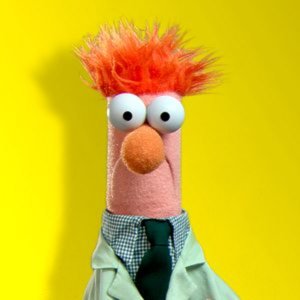
Card thoughts: I always thought Buechele had a weird body. Perhaps it was his oval like head combined with a lack of shoulder breadth that made me think of Beaker. Oh, and for a time he also sported the dreaded flowing curly-haired mullet, the most offensive of all mullets.

The player: Buechele was a third baseman known more for his solid defense than his offense. Despite playing the majority of his career in hitter friendly ball parks, he never slugged better than .450, a low average for what should be a power position.

A college roommate of John Elway at Stanford, Buechele was drafted in the 5th round by the Rangers and immediately assigned to AA Tulsa where he hit .296 in 60 games. Mainly a second baseman in the minors, Buechele was shifted to third in 1985 to get him to the majors quicker (veteran Toby Harrah was manning second, and #285 Buddy Bell was about to be traded to the Reds).

Once Bell was traded on July 19th, Buchele had the unenviable task of replacing one of the all time greatest fielding third basemen. While Buechele held his own at third (he certainly was fielding better than the aging Bell), his average of .219 no doubt fueled many a fans lament at the loss of the popular Bell.

Luckily, Buechele began to hit better the following season. Although his average remained consistently low (he never hit above .250 in any of his full seasons with the Rangers), his fielding at third generally made up for his offensive short comings. Before he left the Rangers in 1991, Buechele would lead the league in range factor twice, and fielding percentage one. In fact, his .991 fielding percentage in 1991 at third base is a record at the position.

But in a midst of a career year in 1991 (18 home runs, 66 RBIs. .783 OPS), the Rangers decided it was best to shop him at the top of his game. So he was sent to the Pirates in a deadline move for former #1 draft pick Kurt Miller (the #24 prospect in baseball). While he was an improvement over the yearlong revolving door at third (John Wehner, Jeff King, and Bobby Bonilla all started a lot of games there), he hit just .246 the rest of the season, and .249 the first part of the next one.

With Buechele’s range and fielding affected by the faster artificial turf, he just wasn’t the same player as he was with Texas. Finally, with the Pirates deciding to go with Jeff King full time at third, Buechele was dealt to the Cubs for free agent bust Danny Jackson. I was excited with the arrival of Buechele, as the Cubs finally had a legit third baseman that they had lacked since the departure of Ron Cey.

But Buechele was the wrong side of thirty, and while he didn’t embarrass himself in his four seasons with the team, his 31 home runs in 1144 Cub at bats are pretty poor for a team that plays 81 games a year in a hitter friendly park. Eventually, with Buechele hitting just .189 by July 4th in 1995, he was released, catching on for a few last games with the Rangers a few days later.

Buechele currently manages the Rangers' AAA franchise in Round Rock, Texas.


Rear guard: Jim Bibby is better known as a Pirate. At age 28, 1973 was his first full year in the majors. After starting the year with the Cardinals, he was dealt to the Rangers on June 6. He later came within one hit of pitching a perfect game against the Braves in 1981 (the only hit came from the leadoff hitter, Terry Harper. Bibby retired the next 27 batters in succession). Here's his 1974 card.